Get Your Free Quote…!

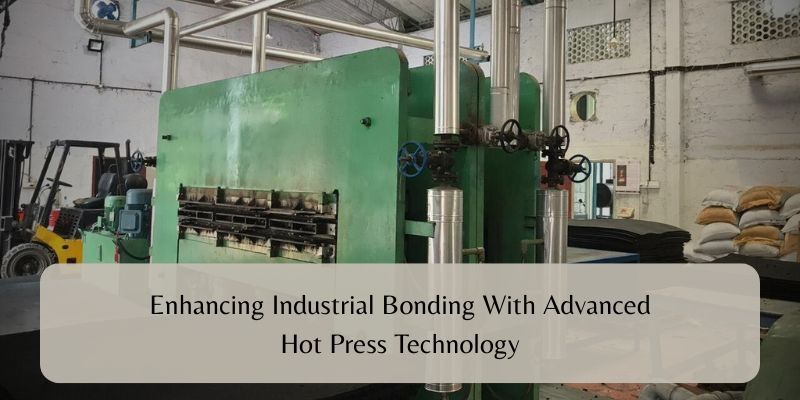
Industrial operations depend heavily on reliable material bonding and structural strength. In sectors where rubber sheets, conveyor belts, and specialized elastomers are used, controlled heat and pressure play a crucial role in maintaining product durability. Hot press technology supports these requirements by ensuring uniform bonding, dimensional stability, and long lasting performance. With precise thermal and hydraulic control, modern hot press systems help manufacturers achieve consistent results across demanding industrial environments.
Rubber based components must withstand heavy loads, friction, and continuous movement. In such conditions, weak joints or poorly bonded sections can lead to system failure. A Hot Press for Endless Rubber supports seamless joining and bonding of rubber materials through controlled heating and compression.
During the pressing process, heat softens the rubber layers while pressure ensures proper fusion between surfaces. This combination creates a uniform structure without visible seams or weak spots. As the rubber cools, the bonded section becomes an integrated part of the material rather than a separate joint. This approach improves strength and ensures that the finished rubber product can perform under high mechanical stress.
Conveyor belts are essential in industries such as mining, packaging, manufacturing, and logistics. These systems operate continuously and carry heavy loads across long distances. The reliability of the belt splice directly affects operational stability.
Thermally bonded splices eliminate the need for mechanical fasteners that can loosen or corrode over time. As a result, conveyor systems operate more smoothly and require fewer maintenance interventions. Stronger joints also reduce the risk of sudden belt failure, supporting safer industrial operations.
In large scale production environments, consistency is critical. Conveyor belts must meet strict performance standards, particularly in high capacity systems. A Hot Press Machine for Conveyor Belt ensures that every splicing operation follows controlled parameters for temperature, pressure, and pressing duration.
Advanced hot press machines incorporate heating plates, hydraulic pressure systems, and digital controls to maintain stable operating conditions. This technology minimizes variations between batches and helps maintain uniform joint strength across multiple belts.
Such consistency improves production efficiency while reducing waste caused by defective splices. Manufacturers can maintain predictable product quality, which is essential for industries that rely on uninterrupted material transport.
Silicone rubber is widely used in industries that require resistance to extreme heat, chemicals, and environmental exposure. Applications include sealing systems, insulation layers, and high performance gaskets. These materials demand precise thermal processing to maintain their unique properties.
Uniform pressure distribution prevents surface defects and ensures that the sheet retains its structural stability. This capability is particularly valuable in industries such as electronics, aerospace, and advanced manufacturing where material reliability is essential.
One of the key advantages of hot press technology is the ability to maintain consistent processing conditions. Temperature sensors and pressure regulators ensure that materials receive the exact treatment required for proper bonding.
For example, a Hot Press for Endless Rubber maintains stable heat levels throughout the pressing cycle to prevent uneven curing. Similarly, systems used for conveyor belts and silicone sheets rely on controlled parameters to achieve optimal bonding strength. This precision reduces material rejection rates and supports continuous production.
Reliable bonding processes contribute directly to improved operational efficiency. Strong rubber joints and conveyor belt splices minimize unexpected failures that can interrupt production lines. When equipment runs smoothly, maintenance teams can focus on scheduled servicing rather than emergency repairs.
A Hot Press Machine for Conveyor Belt supports faster and more dependable splicing, allowing maintenance crews to restore systems quickly. This efficiency is particularly valuable in industries where downtime leads to significant productivity losses.
Hot press systems are adaptable to a wide range of materials and industrial processes. From rubber sheets and conveyor belts to specialized silicone products, the combination of heat and hydraulic pressure creates durable and consistent results.
A Hot Press for High Temperature Silicone Rubber Sheet demonstrates how this technology supports advanced materials used in high performance environments. Similarly, equipment designed for endless rubber and conveyor belts ensures dependable performance in heavy duty industrial systems.
Reliable bonding and material strength are essential for efficient industrial operations. Hot press technology delivers these benefits through controlled heat and hydraulic pressure, producing durable joints and consistent material performance. Whether used as a Hot Press for Conveyor Belt applications or for advanced silicone processing, these systems support long lasting reliability and improved productivity across manufacturing and material handling industries.